Standard pavers
$7k–$18k
- Sod removed and soil excavated
- 6 to 8 inches of compacted base
- 1 inch of screeded bedding sand
- Standard Belgard or Unilock pavers
- Edge restraint spiked every foot
- Polymeric sand swept and set

Paver patio installation · Licensed & insured · Named paver brands
A hardscape supervisor measures the space, checks the soil and drainage, and sends three written prices within 24 hours: standard pavers, premium pavers, or a patio with seat walls and a fire pit. Every price shows the base depth, the paver line and the joint sand, because that is what keeps it flat.
Text a photo of the yard where the patio will go. A hardscape supervisor replies within 5 minutes during business hours.
What happens after you text us
Most first conversations sound like this. You describe the yard and the look, the supervisor asks about soggy spots and the door height, and you finish with a sample visit and an estimate date.
Hi, we would like a paver patio at the bottom of the deck stairs, maybe 16 by 24, with a round fire pit. We like a gray modern look.
Hi Amy, this is Ray, I run the hardscape crews for ProBuild Remodeling. That size with a fire pit is one we build often. Is the yard flat there, and does it stay soggy after rain?
Mostly flat, a little soggy near the fence. Sending a photo now.
Got it. A soggy corner just means a deeper base and a drain line at the low edge. For the modern gray look I will bring Techo-Bloc and Belgard slab samples. Friday at 4 to measure, estimate in writing Monday?
Friday works. Can the fire pit run on gas instead of wood?
Yes. I will check where your gas meter is so the line and the burner are priced in the same estimate.
What a paver patio costs
Every tier sits on the same compacted base, because the base is what keeps a paver patio flat. The price moves with the paver line you choose and with what is built in: borders, steps, seat walls, a fire pit. Most homeowners land in the premium tier.
Standard pavers
$7k–$18k
Premium pavers
$18k–$38k
Patio with built-ins
$38k–$75k
Choose the tier, the patio size and the kind of site. The range moves as you pick, built on the per-square-foot numbers our hardscape supervisors quote with.
A range, not a quote. Your written estimate comes after the visit and does not change once you approve it.
Typical range for your answers
Turn this range into a written paver priceWhere the money goes
Averages from our recent premium paver patios. A patio is built mostly by hand, one paver at a time, on a base that takes a day or two to dig and compact. A low bid usually saves on the base, the one layer nobody ever sees.
Get my itemized paver price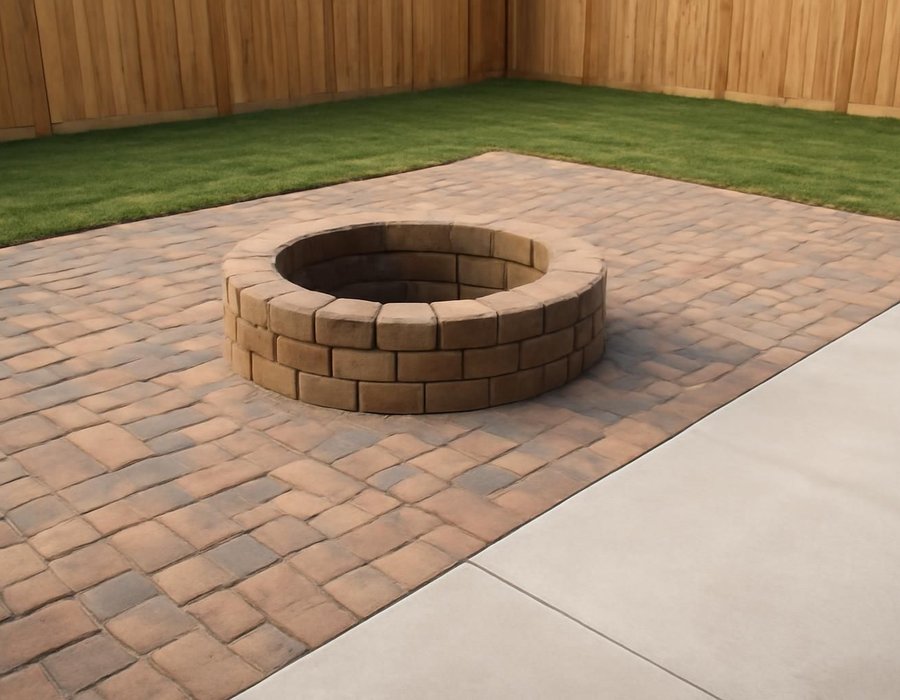
Pavers or poured concrete
A paver patio costs 20 to 40 percent more than a stamped slab, but it flexes with frost, never needs a crack repair and can be lifted to fix a sunken spot. At the visit we check six things and write down which answer fits your yard.
| If this describes your yard | We recommend |
|---|---|
| Winters freeze and thaw many times a season | Pavers |
| You want the lowest price per square foot | Concrete |
| Utility lines or a septic tank run under the area | Pavers |
| You want one smooth surface for chair legs | Concrete |
| You want curves, borders and mixed colors | Pavers |
| The patio will sit under a roof or a pergola | Concrete |
How long it takes
Standard patios take about a week of work, premium patios two to three, patios with seat walls and a fire pit up to four. You can walk on pavers the day they are finished; polymeric sand needs a dry day to set.
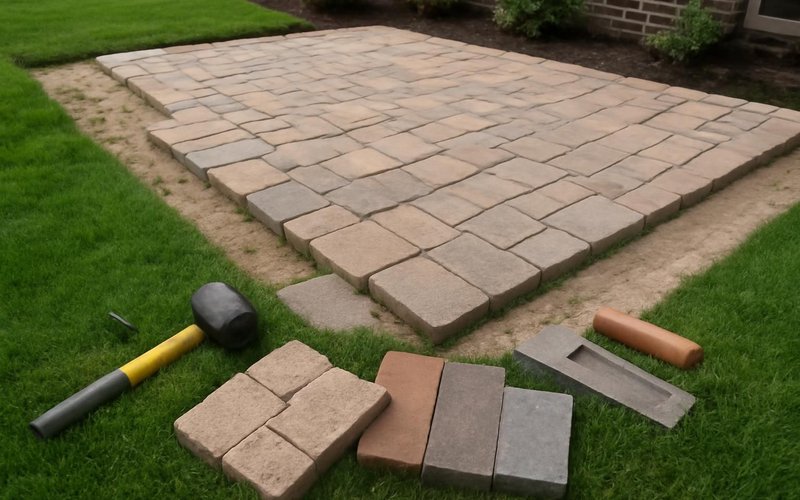
Before day one
Layout drawn, pavers chosen from samples laid in your yard, utilities marked, permit filed if needed.

First days
Soil dug 8 to 10 inches down, fabric laid, gravel compacted in 2-inch lifts, slope set by laser.
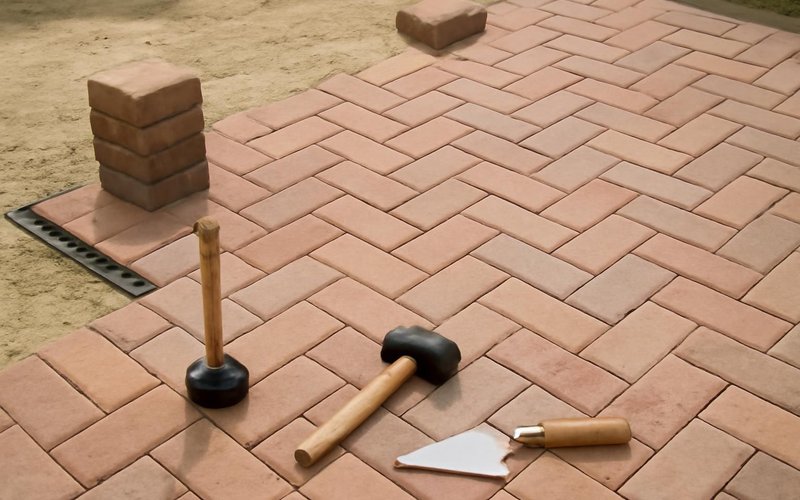
Middle of the job
Bedding sand screeded flat, pavers laid in pattern, borders cut on a wet saw, edge restraint spiked.
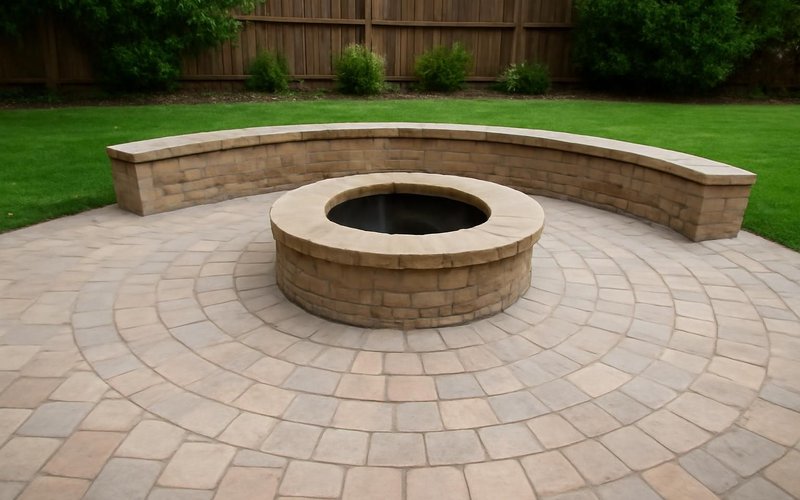
Final days
Polymeric sand swept in and misted, surface compacted, fire pit or walls finished, walkthrough with you.
Remodeling concepts
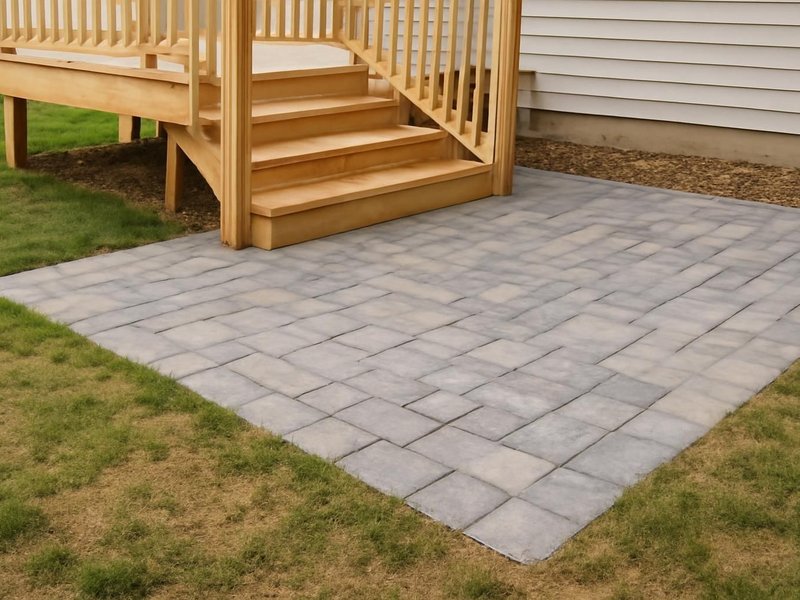
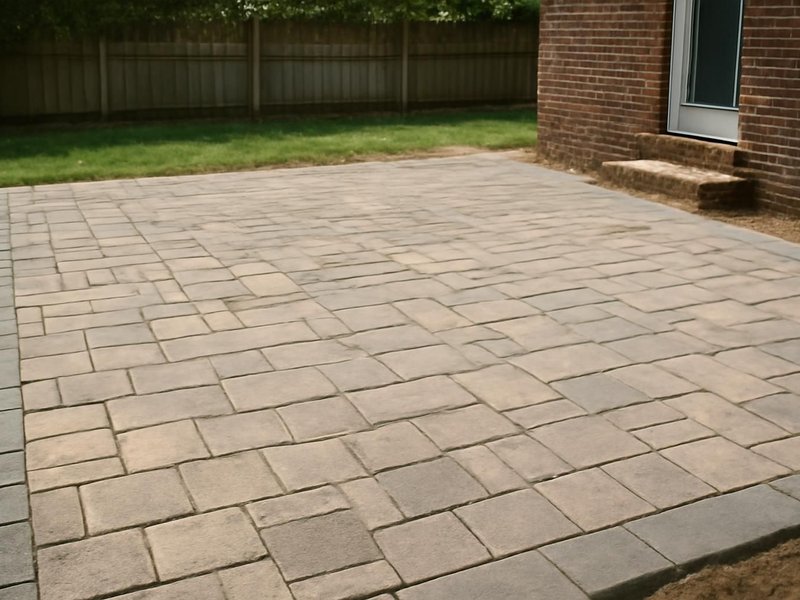
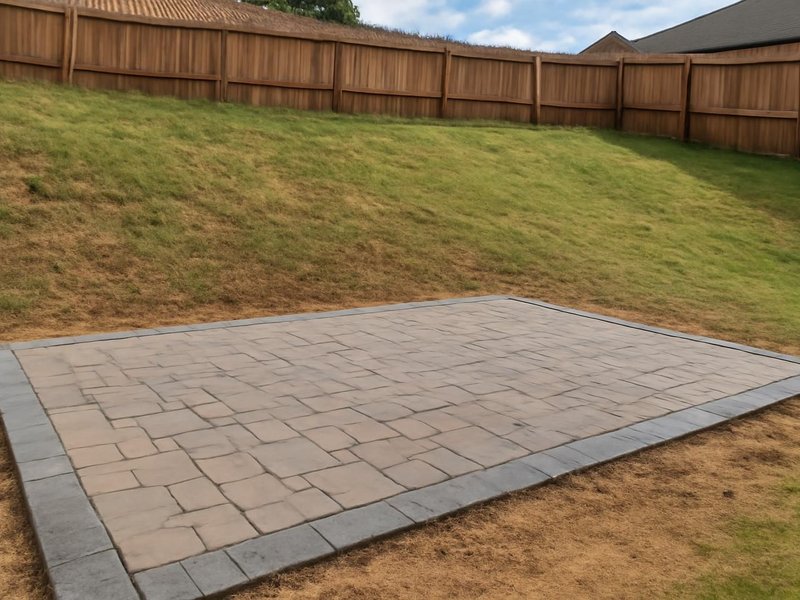
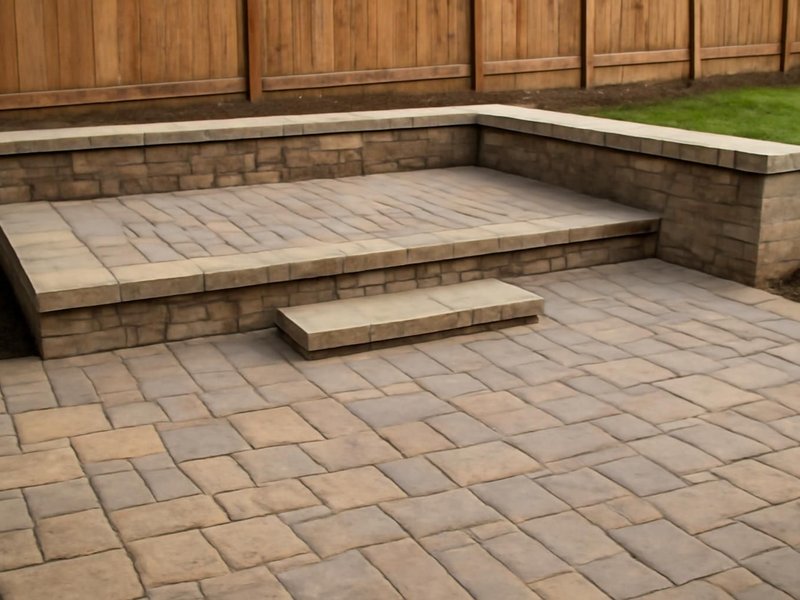
AI-generated examples of existing conditions and remodeling possibilities. Each image is a separate concept, not a documented transformation of the same home.


What your patio is made of
The words paver patio on a quote say nothing about what sits underneath or which paver you get. Ours names the brand and line, the base stone, the joint sand and the edge, because that is where two prices usually differ.
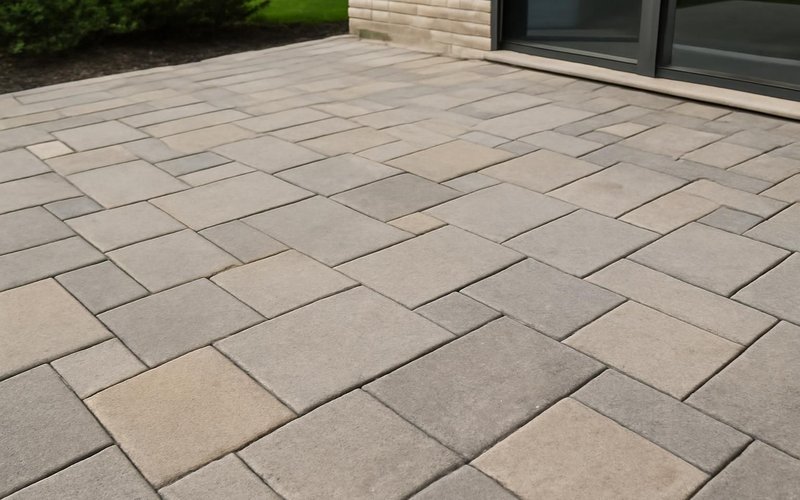
Large-format and textured slabs such as Blu and Aberdeen, with a dense surface that resists salt and fading. A premium modern choice.

Lines like Catalina and Mega-Arbel in many colors and sizes. A strong middle option with good color depth and a wide choice of shapes.
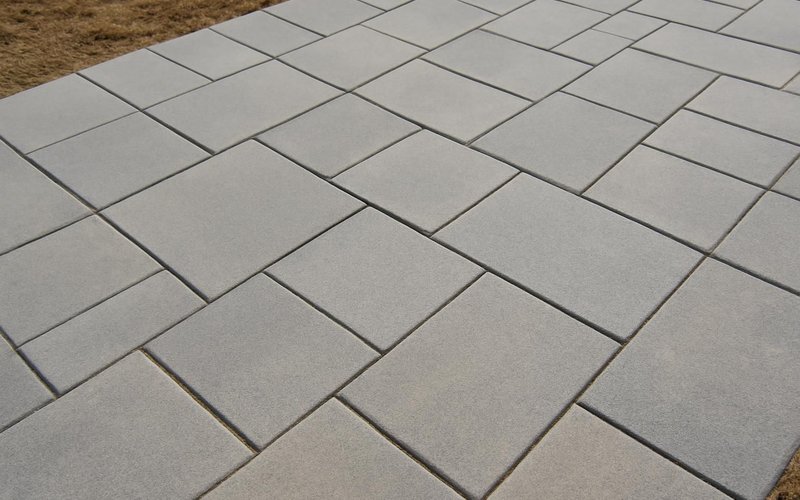
Surfaces like Beacon Hill and Umbriano, made with a hard wear layer that holds color longer. Offered in both classic and modern looks.
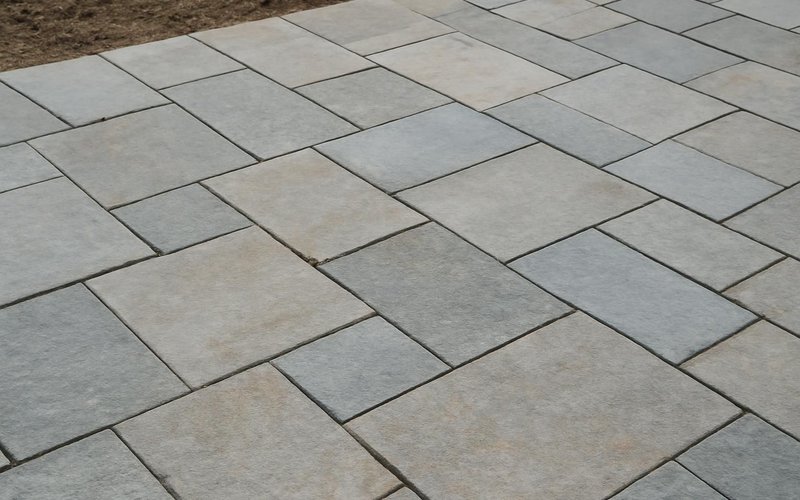
Bluestone, travertine and flagstone laid on the same compacted base. Every piece is unique, and stone costs more to cut and set.
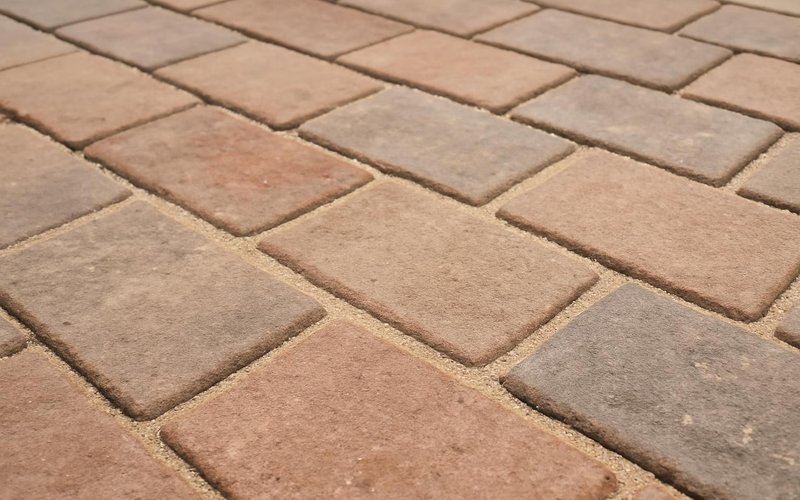
Joint sand from makers like Techniseal or Alliance Gator that hardens once misted. It holds pavers tight and keeps weeds and ants out.
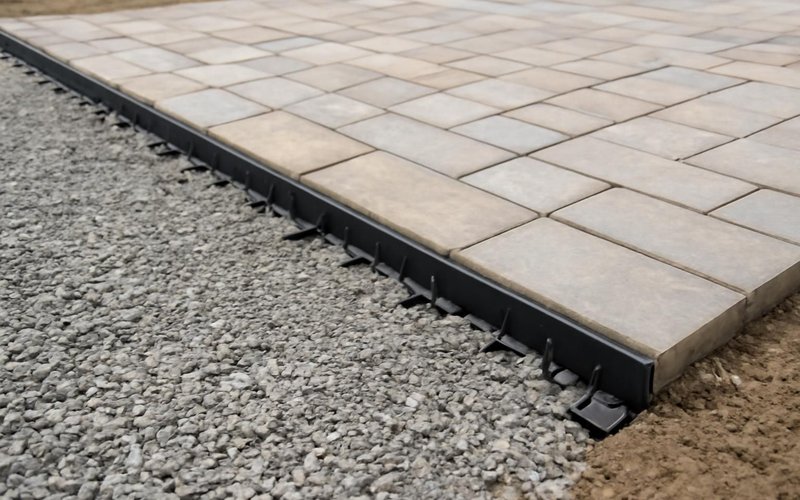
Crushed 3/4-inch stone compacted in lifts, an inch of bedding sand and a spiked edge: the hidden layers that keep the pavers flat.
Written into every contract
The approved price is the final price. Change orders only with your written approval.
A credit for every working day of delay we cause. Weather and inspections excepted, in writing.
Dust barriers, floor protection and a clean-up before we leave. Your home stays livable.
A text or email every working day with photos and tomorrow's plan, or the day is free.
Workmanship warranty in writing, transferable to the next owner, backed by a fixed address.
A small deposit, then you pay only for work that is already completed, inspected and photographed.
Who builds your patio
You meet them before the excavator comes. Each is background-checked and named in your contract, and the person who checks the base is the one who signs off on it.

Checks base depth and slope daily, sends your evening update.

Screeds the sand flat and lays the pattern tight and square.

Cuts the borders and curves, sweeps in the polymeric sand.
Illustrative project scopes
Planning examples with illustrative budgets and durations. These are not completed customer jobs, invoices or promises about your project.
Your yard is not average
Every paver estimate begins with the three tiers, then changes for soil, access, slope and what you want built in. Pick the one that sounds like your yard.
Pavers flex with frost instead of cracking, as long as the base is deep enough. In cold climates we build 8 to 12 inches of base and choose pavers rated for freeze and salt, such as Unilock and Techo-Bloc lines.
Price a paver patio for cold wintersA gas fire pit needs a line from the meter, a burner rated for outdoor use and clearance from the house. A wood fire pit needs a steel ring and a heat-resistant cap. Both sit on the same base as the patio.
Price a paver patio with a fire pitDogs dig at sand joints and wear paths along the edges. Polymeric sand and a firm spiked edge stop both, and textured pavers give grip by the gate. We pitch the whole patio slightly so a garden hose rinses it clean.
Price a dog-proof paver patioA backyard with no gate wider than 4 feet means smaller machines and more hand work, which adds some labor. We plan the route at the visit, protect the lawn with mats and price the access as its own line.
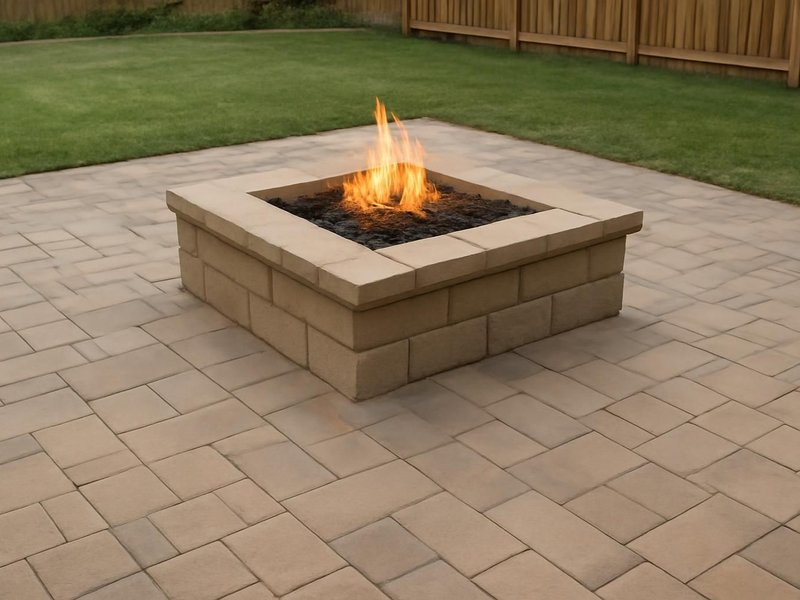
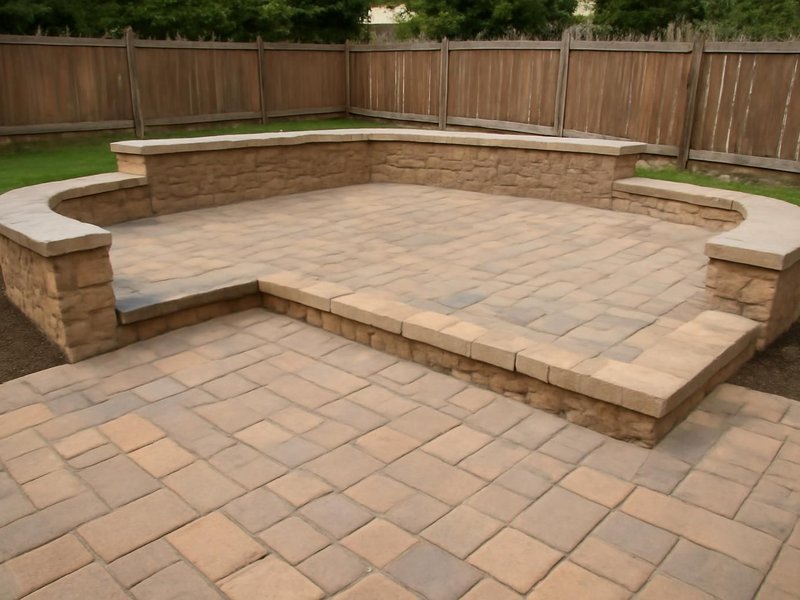
Price my hard-to-reach patioLarge-format slabs, a seat wall with lights under the caps, a gas fire feature and a pergola pad turn the patio into a room. Each upgrade is a separate line in the estimate so you choose what matters most to you.
Price my premium paver projectPatio this year, walls and a fire pit next year. We build the base and drainage once, leave a clean edge and a gas sleeve where the next phase will go, so nothing you already paid for has to be dug up twice.
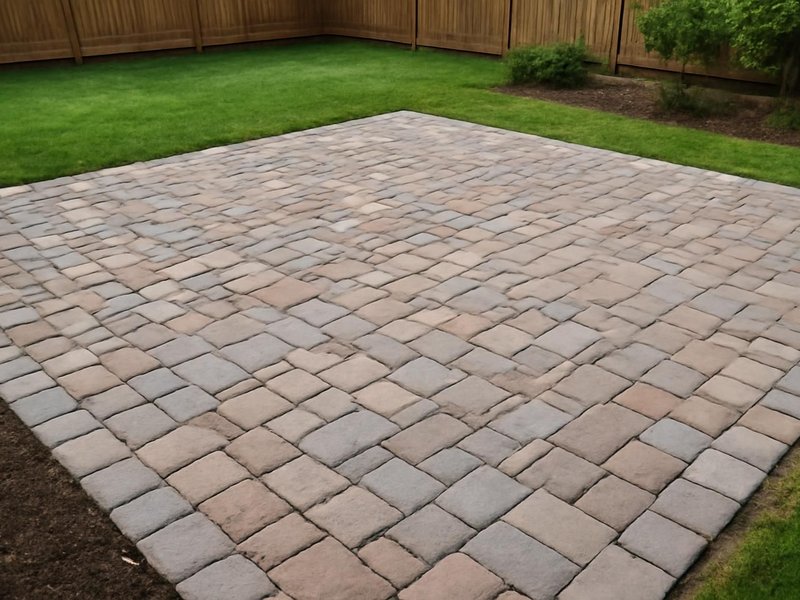
Plan my paver patio in phasesStandard pavers in one color, straight edges and a simple pattern cut labor sharply. A contrasting border gives most of the premium look. Every upgrade appears as its own line so you can leave any of them out.
Price a budget paver patioA permeable paver system lets rain soak through open joints into a deep stone base instead of running to the lowest corner. Some towns count it toward stormwater rules, which can make the permit easier.
Price a permeable paver patioWhat this service is
Paver patio installation is the building of an outdoor surface from interlocking concrete or natural stone pavers, laid on a compacted gravel base and a leveled sand bed and locked by an edge restraint and joint sand. ProBuild Remodeling installs paver patios with its own licensed hardscape crews, using named brands like Belgard, Unilock and Techo-Bloc.
The service covers excavation and haul-off, filter fabric where the soil needs it, the gravel base, bedding sand, pavers, cuts, edge restraint, polymeric sand, drain lines and optional built-ins like seat walls, steps and fire pits. It does not cover paver driveways, which need a deeper base, poured concrete patios, pergolas or outdoor kitchen appliances.
It is for homeowners who want a patio that can be repaired paver by paver, handles frost well and comes in many colors and patterns. It is not for homeowners who want the lowest possible first price, where a broom-finish slab fits better, or for surfaces that must be perfectly smooth.
Questions about paver patios
Most paver patios cost $20 to $40 per square foot installed, including the base, sand and edging. A 300 square foot patio in standard pavers usually lands around $7,000 to $12,000. Premium lines, curves, borders and built-ins like fire pits push it higher.
For a patio with foot traffic, 6 to 8 inches of compacted crushed stone plus 1 inch of bedding sand. In freeze-thaw climates or on clay soil, 8 to 12 inches. Driveways need 10 to 12 inches or more because of vehicle weight.
Polymeric sand is joint sand mixed with a binder that sets hard after it is misted. It keeps pavers from shifting and stops most weeds and ants. It is standard on our patios; plain stone chips are only used in permeable systems with open joints.
A paver patio on a proper base lasts 25 to 50 years, and the pavers themselves often longer. The joint sand may need topping up every few years, and a sealer every 3 to 5 years keeps the color rich if you want it to.
All three make durable concrete pavers that meet the ASTM standard for strength and freeze resistance. Belgard has the widest range at middle prices, Unilock is known for its hard wear surface and Techo-Bloc for large modern slabs. We bring samples of each.
With polymeric sand and a sound base, very few. Weeds usually sprout from seeds landing in dirt that collects on top of the joints, not from below. A yearly rinse and a sealer every few years keep the joints clean.
Sometimes, using thin pavers bonded to a sound, flat slab that drains properly. If the slab is cracked, sinking or pitched toward the house, it is cheaper over time to break it out and build a new base.
You can walk on it the same day the pavers are compacted. Polymeric sand needs 24 to 48 hours of dry weather to cure before heavy rain or a hose. Furniture and a grill can go out the next day.
Paver patios near you
Paver patios are built by local hardscape crews who source pavers from nearby yards and know your frost depth, under the license of the state the house is in.
Free paver patio estimate
A hardscape supervisor reads your answers, replies within 5 minutes during business hours and sets the sample visit in the same thread. Three written prices follow within 24 hours.
Images marked as AI concepts illustrate remodeling ideas, materials and conditions. They are not photographs of completed ProBuild projects or verified before-and-after pairs.